
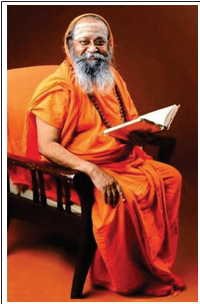
 Bhagavan Sri Krishna describes a sthita prajna as one with purnatvam (fulfilled), sarva kama tyagatvam (desireless), samatvam (equanimous), vairagyam (dispassionate), abhayam (fearless), akrodham (no anger), anabhisneham (unattached), anabhinandanam (no likes), advesha: (no hate). What is spontaneous to a jnani/ sthita prajna is cultivated deliberately by an aspirant. For an aspirant, atma dhyanam (meditating upon the self) is very important. Samadhanam (concentration) and Shama: (thought control) are required to be able to do atma dhyanam. In turn, Dama: (sense control) necessary for these, should be cultivated by avoiding exposure to sense objects unnecessarily. One should be warned with respect to sense control but not fall into guilt. There are bound to be impediments, but we should never give up or lose enthusiasm.
Sloka 60 Sense control & mind control
यततो ह्यपि कौन्तेय पुरुषस्य विपश्चितः।
इन्द्रियाणि प्रमाथीनि हरन्ति प्रसभं मनः।।2.60।।
कौन्तेय – Arjuna! हि – Indeed विपश्चितः पुरुषस्य अपि – even of a wise man
यततः– who is striving इन्द्रियाणि प्रमाथीनि – senses will churn मनः – the mind
प्रसभं हरन्ति – forcibly carry away
An aspirant seeks to be a sthita prajna by doing nididhyasanam (meditating upon atma jnana) with a peaceful and concentrated mind. The senses should not disturb the mind. Indriya nigraham (sense control) is difficult to practice but one should not be demotivated by failures or guilt. One should remain steadfast in the practice as Sage Visvamitra. Indriya nigraha: (sense control), then mano nigraha: (mind control) and dhyanam (meditating over lessons on tattva jnana/ philosophy), makes one a sthita prajna (equanimous/ wise).
Srimad Devi Bhagavatham says:
ज्ञानिनामपि चेतांसि देवी भगवती हि सा ।
बलादाकृष्य मोहाय महामाया प्रयच्छति ॥४२॥
Even a wise man succumbs to Bhagavati’s (Mahamaya) strong force. We seek Her blessings to avoid that. This Gita shloka means the same. The intellect will warn, but the mind will ignore that and do as desired.
काम जानामि ते मूलं संकल्पात्किल जायसे।
न त्वां संकल्पयिष्यामि समूलो न भविष्यसि॥ २५ ॥ (Mahabharata #12.171.25)
Desire is born out of sankalpa (thought). By not thinking of the desire, one may destroy it with the root.
शुभाशुभाभ्यां मार्गाभ्यां वहन्ती वासनासरित्
पौरुषेण प्रयत्नेन योजनीया शुभे पथि (Muktikopanishad)
The innate tendencies of man accumulated in countless births flows in two channels – one takes in the path of good and happiness and the other takes in the path of evil and sorrow. Man should take efforts to choose the first path that leads to goodness. Many tend to choose the second path as a shortcut to success and sense pleasures. It is important to keep in mind that one should choose the righteous path though arduous and slow with the goal of permanent happiness in mind.
Renunciates enjoy permanent, unlimited happiness. Many sympathise with renunciates feeling that they are missing the joys of life. The senses will exert strong force and confuse the mind that life is meant to enjoy and not to practice control. There is a war going on in the mind between sense pleasures and divine happiness.
Sri Krishna later says (18.36-38)
अभ्यासाद्रमते यत्र दु:खान्तं च निगच्छति || 36||
यत्तदग्रे विषमिव परिणामेऽमृतोपमम् |
तत्सुखं सात्त्विकं प्रोक्तमात्मबुद्धिप्रसादजम् || 37||
विषयेन्द्रियसंयोगाद्यत्तदग्रेऽमृतोपमम् |
परिणामे विषमिव तत्सुखं राजसं स्मृतम् || 38||
यदग्रे चानुबन्धे च सुखं मोहनमात्मन: |
निद्रालस्यप्रमादोत्थं तत्तामसमुदाहृतम् || 39||
By practice, a sthita prajna manages his mind and frees it from sorrows. Sattvika sukham comes from atma jnana (self knowledge), rajasa sukham comes from sense pleasures and tamasa sukham comes from sleep.
This sloka drives home the importance of being alert and avoiding carelessness with respect to sense control. Senses will deceive us but if we give in, the purpose of life, atma jnana, will be lost.
Throughout the Gita we see several slokas which reiterate the need for sense control. We should not suppress the mind, nor should we allow uncontrolled expression of desires. We should use our viveka (discrimination).
Shama and dama (sense and mind control) are pre-requisites for study of Vedanta. Our scriptures reiterate the need for it. Rituals which are part of our religion help us cultivate this control. We should willingly follow the rules to enjoy pleasures righteously in grihastashrama (householder’s lifestyle). In vanaprastha one should cut down sense-enjoyments. Sanyasashrama is devoted to Vedanta study with minimal need-based consumption of sense objects.
स्वाद्वन्नं न तु याच्यतां विधिवशात् प्राप्तेन सन्तुष्यताम् । एकान्ते सुखमास्यतां परतरे चेतः समाधीयताम्
(Sadhana Pancakam #4, 5) – One should give up desire for delicious food and be contented with whatever comes his way. He should live happily in solitude with a tranquil mind directed towards the Supreme.
Sloka 61 Antaranga sadhana / dhyana (meditation)
तानि सर्वाणि संयम्य युक्त आसीत मत्परः।
वशे हि यस्येन्द्रियाणि तस्य प्रज्ञा प्रतिष्ठिता।।2.61।।
संयम्य – having restrained / controlling
सर्वाणि तानि – all those (sense organs & organs of action) युक्त – with focussed mind
आसीत – in meditation
मत्परः – knowing the self as the all-pervading, non-dual consciousness principle
वशे हि यस्य इन्द्रियाणि – one whose sense organs are under control
तस्य प्रज्ञा प्रतिष्ठिता – remains firm in jnana/ wisdom.
Life is complicated. If we find a way out for one issue, another will crop up. Amidst all this, our ancestors found a way to run life smoothly and maintain peace of mind following the teachings of the scriptures.
Sri Sankaracarya gives a wonderful meaning for ‘मत्परः’ – ‘अहं वासुदेवः सर्वप्रत्यगात्मा परो यस्य सः मत्परः न अन्योऽहं तस्मात्’ – knowing the self as Vasudeva the Universal non-dual consciousness principle.
One should give quality time to assimilate the teachings of Vedanta by contemplating/ meditating upon them (Nididhyasanam). This needs a controlled mind. Otherwise, one may complain of boredom, emptiness, depression, etc. Yoga sastram discusses the challenges faced in dhyana as laya, vikshepa, kashaya, rasasvada (sleep, disturbance/ wandering, non-functional/ inactive, enjoying the pleasant feeling) – these need to be overcome. The entire 6th Chapter of the Gita explains this shloka.
Knowledge gained by sravana, manana (listening, clarified free of doubts) should be well seated in the mind. ‘Brahma vid brahmaiva bhavati’ (Mundaka 3.2.9)- Knowing brahman one remains brahman.
Sloka 62
ध्यायतो विषयान्पुंसः सङ्गस्तेषूपजायते।
सङ्गात् संजायते कामः कामात्क्रोधोऽभिजायते।।2.62।।
ध्यायतः पुंसः – for the one who dwells upon विषयान् – sense objects सङ्गः – bondage
तेषु – with reference to them उपजायते – is born सङ्गात् – from bondage संजायते – is born कामः – deep desire कामात् – from desire क्रोधः– anger अभिजायते – is born
Sita desired for the disguised Maya deer (Maricha) while she had with her Sri Rama, the epitome of happiness. When we fail to recognize the available happiness, we seek external objects that deceive by giving temporary pleasure. It is said that anyone who goes in front of Vali will lose half their power to him. It is the same with sense objects.
When we see sense objects they get registered in the mind. Then it flashes back, and the mind keeps dwelling upon it. Every recurring thought makes the want stronger. Then, one gets to the sense object and engages in enjoying it.
The mind is so powerful, but it dissipates so much. If we keep the mind open and exposed to sense objects unnecessarily, they will steal our power of knowledge (jnana sakti).
कामः क्रोधश्च लोभश्च देहे तिष्ठन्ति तस्कराः।
ज्ञानरत्नापहाराय तस्मात् जाग्रत जाग्रत॥ (Vairagya Dindima)
We possess treasure of knowledge and in our body also reside thieves called desire, anger and jealousy that are waiting to steal our knowledge.
Sri Krishna says later:
त्रिविधं नरकस्येदं द्वारं नाशनमात्मन: |
काम: क्रोधस्तथा लोभस्तस्मादेतत्त्रयं त्यजेत् || 21|| (#16.21)
Give up desire, anger and jealousy which are the three gates to hell.
One who secures gates of the five senses is sure to enjoy moksha says Thiruvalluvar (Kural #24). All living beings naturally tend to be extroverted. What is common to animals and man is to eat, sleep and reproduce. What is unique to man is his intelligence/ thinking power. Man has free will – he should exercise it rightly to elevate himself from being a man-man to becoming a God-man and should not be an animal-man.
Some interests come and go feebly, but some get stronger, especially with respect to love for the opposite sex. Those who fall in love and get stuck feel they cannot live without their loved and end up with anger pangs against those who do not support/ approve of it.
Five most dreaded sins are killing, stealing, coveting another’s wife, intoxication and earning by deceiving / gambling. Whichever country is free of these will progress and the leader is bound to protect his citizens from these. People try to take short-cuts to progress financially but eventually lose peace of mind.
Is it right to give children/ citizens all that they desire, whether or not it is good for them? Think!
There is nothing in this world which can be categorized as a source of joy or sorrow. What gives joy to one may give sorrow to another. What gives joy at a point in time will become a matter of sorrow some other time – a toy that gives joy as a child does not continue to, as we age. If we contemplate deeply, we will understand that joy and sorrow depend upon the condition of our mind. Thinking that an external object, relationship or circumstance gives happiness is shobhanadhyasam (ignorance). One should go by the scriptures in deciding what to choose, and not one’s own mind that is subject to change. If we allow unnecessary desires to continue, it will take away our peace of mind. We should nip it in the bud by meditating upon Bhagavan and contemplating upon the scriptures.
Thiruvalluvar says: If a man would like to guard himself, let him guard against anger; if he does not guard it, anger will kill him (Kural #305). Anger kills the person who it associates with like how a matchstick burns first.
If you change your mind after your first thought, you have saved yourself. If you permit it to linger, it develops like this – Seeing, repeatedly remembering, developing bondage, getting attached to it. Anything that challenges fulfillment of that desire ignites anger. (Know that it progresses like this: Vishaya darshanam, dhyanam, vishaya sangam, vishaya kama:, krodham.)
